

For years, the loudest criticism of the ketogenic diet has been the “constipation factor.” Traditional keto was often portrayed as a plate of bacon and butter, leaving very little room for the roughage our bodies crave. But as we move into a more sophisticated era of metabolic health, a new trend is taking over: Fiber Maxing.
Heads up: This post may contain affiliate links, I may earn a small commission at no extra cost to you.
Fiber Maxing is the intentional practice of hitting high daily fiber targets—typically 30 grams or more—while strictly maintaining nutritional ketosis. It’s a shift away from “Dirty Keto” toward a “Functional Keto” lifestyle that prioritizes the gut microbiome as much as the fat-burning state.
If you’ve hit a weight loss plateau, struggle with digestive discomfort, or simply want to ensure your low-carb lifestyle is sustainable for the long haul, Fiber Maxing might be the missing piece of your metabolic puzzle.
What Is Fiber Maxing?
Fiber maxing is the intentional strategy of hitting 30 grams or more of fiber per day while staying in nutritional ketosis. Instead of fearing fiber because it’s a “carb,” you use it strategically to support blood sugar control, digestion, hormones, and fat loss.
Think of it as keto, but smarter.
Want to take this on the go?
Download my 1 page Fiber-Maxing cheat sheet for free!
Why Fiber Is the Missing Link for Weight Loss Plateaus
If you’re stuck in a keto plateau or feel low-energy despite “doing everything right,” fiber might be the piece you’re overlooking.
Here’s why fiber is such a game-changer:
- It stabilizes blood sugar and insulin levels
- It feeds your gut bacteria (which affects fat loss hormones)
- It increases fullness so you naturally eat less
- It improves digestion, energy, and metabolic flexibility
In short: ketosis sets the stage—fiber makes it work.
What Is Fiber Maxing and Why Does It Matter for Keto?
One of the biggest misunderstandings on keto is carbs, specifically total carbs vs. net carbs.
Total Carbs vs. Net Carbs (The Keto-Friendly Math)
- Total carbs = all carbohydrates in a food
- Net carbs = total carbs minus fiber (and sometimes sugar alcohols)
Fiber doesn’t spike blood sugar, which means it doesn’t trigger a significant insulin response. That’s why keto focuses on net carb calculation, not total carbs.
The Glucose Buffer Effect
Fiber Maxing isn’t just about digestion; it’s about metabolic control. Soluble fiber creates a gel-like substance in your gut that slows down the absorption of other nutrients. This means that even if your meal contains a small amount of sugar or starch, the fiber acts as a “buffer,” flattening your glucose curve and keeping you in a deeper state of ketosis.
In a world obsessed with Continuous Glucose Monitors (CGMs), Fiber Maxing is the ultimate “bio hack” for a flat-line glucose response.
Bottom line: Fiber supports ketosis, it doesn’t break it.
The Benefits of High Fiber for Low-Carb Dieters
Many people think the only reason to eat fiber is to “keep things moving,” but the benefits of Fiber Maxing on Keto go much deeper than the bathroom.
1. Fueling the “Good” Bacteria (Prebiotics)
Your gut is home to trillions of bacteria that influence everything from your mood to your immune system. These bacteria don’t eat fat or protein; they eat prebiotic fiber. When you Fiber Max, you are providing the raw materials for these bacteria to produce Butyrate, a short-chain fatty acid that has been shown to reduce inflammation and improve insulin sensitivity.
2. Natural GLP-1 Stimulation
You’ve likely heard of GLP-1 in the context of weight-loss medications. But did you know your body produces it naturally? When fermentable fiber reaches your lower digestive tract, it triggers the release of GLP-1 and PYY, the hormones responsible for telling your brain, “I’m full.” Fiber Maxing allows you to harness this “fullness signal” naturally, making intermittent fasting feel effortless.
3. Heart Health on a High-Fat Diet
On keto, fiber helps:
- Manage cholesterol levels
- Support bile acid metabolism
- Reduce LDL oxidation
High fat + high fiber is the sweet spot.
Download my 1 page fiber-maxing cheat sheet for free
The Best “Fiber Maxing” Foods for Keto (The Shopping List)
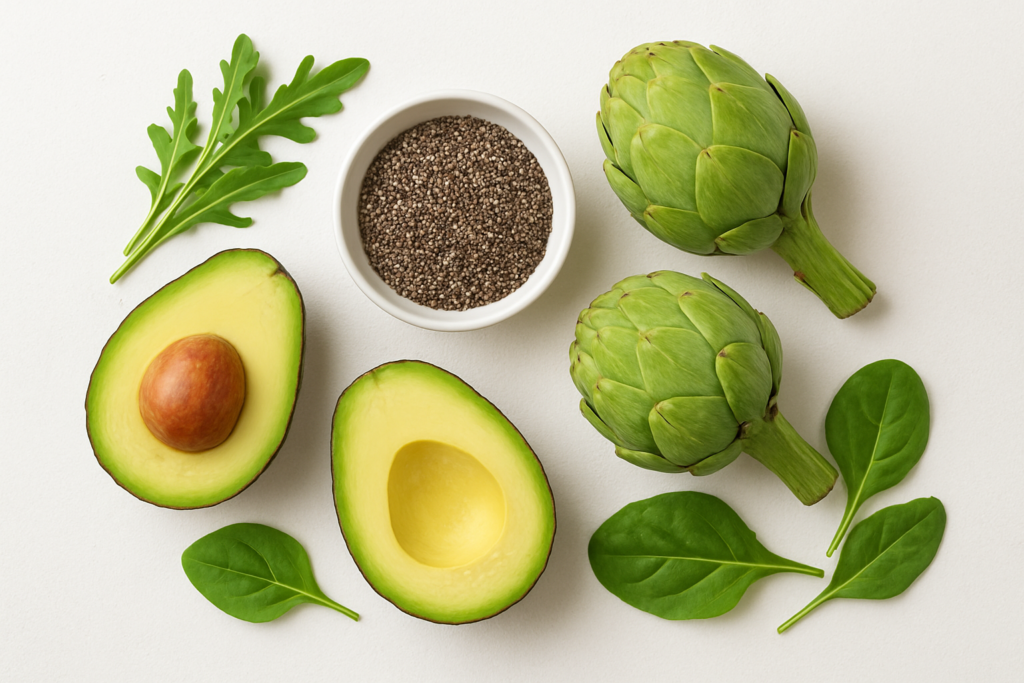
The key to successful fiber maxing on keto is choosing whole foods where the fiber count is nearly equal to the total carb count. This allows you to “crowd out” hunger without creeping toward your daily insulin threshold.
Here are the top-tier ingredients to add to your rotation:
High-Fiber, Low-Carb Powerhouses
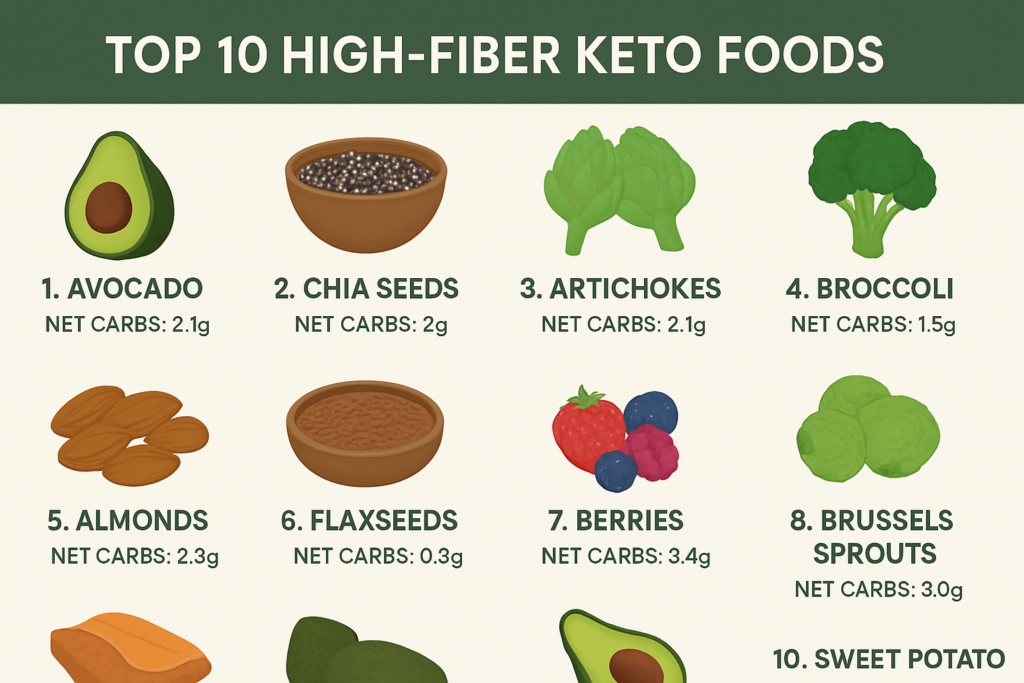
| Food Item | Serving Size | Total Carbs | Fiber | Net Carbs |
| Avocado | 1 Medium | 12g | 10g | 2g |
| Chia Seeds | 2 Tbsp | 12g | 10g | 2g |
| Flaxseeds (Ground) | 2 Tbsp | 4g | 3.8g | 0.2g |
| Artichoke Hearts | 1/2 Cup | 7g | 5g | 2g |
| Raspberries | 1/2 Cup | 7g | 4g | 3g |
| Blackberries | 1/2 Cup | 7g | 4g | 3g |
| Pecans | 1 oz (28g) | 4g | 3g | 1g |
| Psyllium Husk | 1 Tbsp | 8g | 7g | 1g |
New-Age Keto Fiber Heroes
Beyond the standard vegetables, the 2026 wellness scene has introduced several “super-fibers” that make hitting 30g+ easy:
- Lupini Beans: Unlike black beans or chickpeas, Lupini beans are uniquely low-starch and high-protein. A small serving can provide 5-7g of fiber with only 1g of net carbs.
- Basil Seeds: Similar to chia seeds but they swell faster and offer a massive dose of prebiotic fiber to support keto gut health.
- Hearts of Palm Pasta: A game-changer for pasta lovers; these are almost entirely fiber and water, making them the perfect base for a high-fat pesto.
These foods deliver maximum fiber with minimal net carbs—perfect for keto fiber maxing.
How to Start Fiber Maxing Without Digestive Distress
If you’ve been on a low-fiber “carnivore-adjacent” or “dirty keto” diet, your gut enzymes and bacteria aren’t prepared for a fiber flood. Jumping from 5g to 35g of fiber in one day is a recipe for bloating and discomfort.
To successfully implement fiber maxing on keto, follow these three rules:
1. The “5-Gram” Step-Up
Increase your fiber intake by only 5 grams every 3 to 4 days. This gives your microbiome time to shift and prevents the “fiber backup” that often discourages beginners.
2. Double Your Hydration
Fiber acts like a sponge in your colon. For it to move smoothly and provide those metabolic benefits, it requires significant water. If you increase fiber without increasing water, you will likely experience keto constipation. Aim for an extra 8–12 ounces of water for every 5g of fiber added.
3. Soluble vs. Insoluble Balance
- Soluble Fiber (Found in avocado and chia) slows digestion and helps with blood sugar.
- Insoluble Fiber (Found in leafy greens and nut skins) adds bulk and keeps things moving. A healthy keto gut needs a mix of both to thrive.
Soluble fiber absorbs water. Without enough fluids, fiber can cause constipation instead of relieving it.
Aim for:
- Plenty of water
- Electrolytes (especially sodium and magnesium)
Understanding soluble vs insoluble fiber makes all the difference for keto digestion tips that actually work.
Is “Dirty Keto” Ruining Your Gut?
Most processed keto snacks are:
- Low in fiber
- High in refined fats
- Devoid of gut-supportive nutrients
Fiber maxing shifts keto back toward whole foods, which your gut, and metabolism will thank you for.
Sample One-Day “Fiber Maxed” Keto Meal Plan
This plan is designed to hit approximately 32g of fiber while keeping net carbs under 20g.
- Breakfast: Creamy Berry Chia Pudding
- 3 Tbsp chia seeds soaked in unsweetened almond milk, topped with 1/4 cup raspberries and 1 Tbsp hemp hearts.
- Fiber: 14g | Net Carbs: 4g
- Lunch: Avocado & Sardine Salad Boats
- One large avocado mashed with sardines or tuna, served in large romaine lettuce leaves with a side of sliced cucumbers.
- Fiber: 11g | Net Carbs: 4g
- Dinner: Roasted Salmon with “Fiber-Bomb” Veggies
- 6oz Salmon served with 1 cup roasted Brussels sprouts and half an artichoke dipped in garlic butter.
- Fiber: 7g | Net Carbs: 8g
- Daily Total: 32g Fiber | 16g Net Carbs
Frequently Asked Questions (FAQ)
Targeting these specific questions helps Google see your content as a definitive resource for Fiber Maxing on Keto.
Does fiber kick you out of ketosis?
No. Fiber is a non-impact carbohydrate. Because the human body lacks the enzymes to break down fiber into glucose, it does not raise blood sugar levels or trigger insulin. In fact, fiber helps maintain ketosis by slowing the absorption of other nutrients and promoting satiety.
Can I use fiber supplements like Metamucil on keto?
While you can use supplements, you must be careful. Many brand-name fiber supplements (like orange-flavored Metamucil) contain added sugars or maltodextrin, which will spike your insulin. If you use a supplement, choose unflavored Psyllium Husk powder or Methylcellulose without added sweeteners.
What are the highest fiber, lowest carb vegetables?
The “gold standard” vegetables for fiber maxing include:
- Avocado (Technically a fruit, but a fiber king)
- Artichokes
- Brussels Sprouts
- Broccoli
- Cauliflower
- Leafy Greens (Spinach, Kale, Chard)
Is it possible to eat too much fiber on keto?
Yes. If you increase your intake too quickly without enough water, you may experience “fiber block,” leading to bloating or cramping. Always scale up your intake gradually to allow your keto gut health to adapt.
Final Thoughts
Fiber maxing isn’t a keto “cheat.” It’s a metabolic upgrade. If you want better digestion, easier weight loss, stable energy, and long-term health, fiber deserves a permanent spot in your keto lifestyle.