
Everything You Need to Know to Get Started
Keto diet for beginners, the ultimate guide you need to get started. Have you ever felt stuck with dieting-counting calories, skipping meals, and still not seeing the results? You’re not alone. Millions of people struggle with weight loss and energy crashes, and that’s where the keto diet comes in, known for it’s ability to burn fat, stabilize energy, and curb cravings, keto has become one of the most popular lifestyle changes worldwide.
This post may contain affiliate links, I may earn a small commission at no extra cost to you.
If you’ve been curious about keto but feel overwhelmed by all the information, don’t worry, you’re in the right place. In this guide you’ll discover the fundamentals of low carb high fat diet and learn why so many people are experiencing remarkable keto diet benefits. I’ll walk you through building your first keto foods list and show you how to create a practical keto meal plan that fits your lifestyle.
Understanding the Keto Diet and It’s Benefits

What is The Ketogenic Diet and How It Works
The ketogenic diet is a low carb high fat diet that transforms your body into a fat-burning machine. When you drastically reduce your carbohydrate intake to around 5-10% of your daily calories and increase your fat intake to 70-80%, your body enters a metabolic state called ketosis. In this state, your liver breaks down fat into molecules called ketones, which become your primary fuel source instead of glucose from carbs.
Your typical macronutrient breakdown on keto looks like this:
- Fats: 70-80% of daily calories
- Protein: 15-25% of daily calories
- Carbohydrate: 5-10% of daily calories (usually 20-50 grams)
When you keep carb low, your body starts producing ketones, which become your new fuel source. Think of it as switching from running on gas (carb) to running on clean energy (fat).
Proven Health Benefits Beyond Weight Loss
While many people start keto for weight management, the keto diet benefits extend far beyond the scale. Your brain often experiences remarkable improvements on ketones. Many people report enhanced mental clarity, better focus, and more stable moods. This happens because ketones provide steady fuel for your brain without the ups and downs of glucose metabolism.
Blood pressure often drops as inflammation decreases and excess water weight disappears. People with type 2 diabetes frequently see impressive improvements in blood sugar control.
Other well documented benefits include:
- Reduced inflammation markers throughout the body
- Better sleep quality once you’re adapted
- Increase energy levels without afternoon crashes
- Appetite control due to ketones naturally suppressing hunger
- Better digestive health for those sensitive to high-carb foods
To help you get started, here’s a quick video that breaks down the amazing keto benefits beyond weight loss and how it can support your health journey. Watch below, then keep reading for a full guide.
Getting Started with Keto
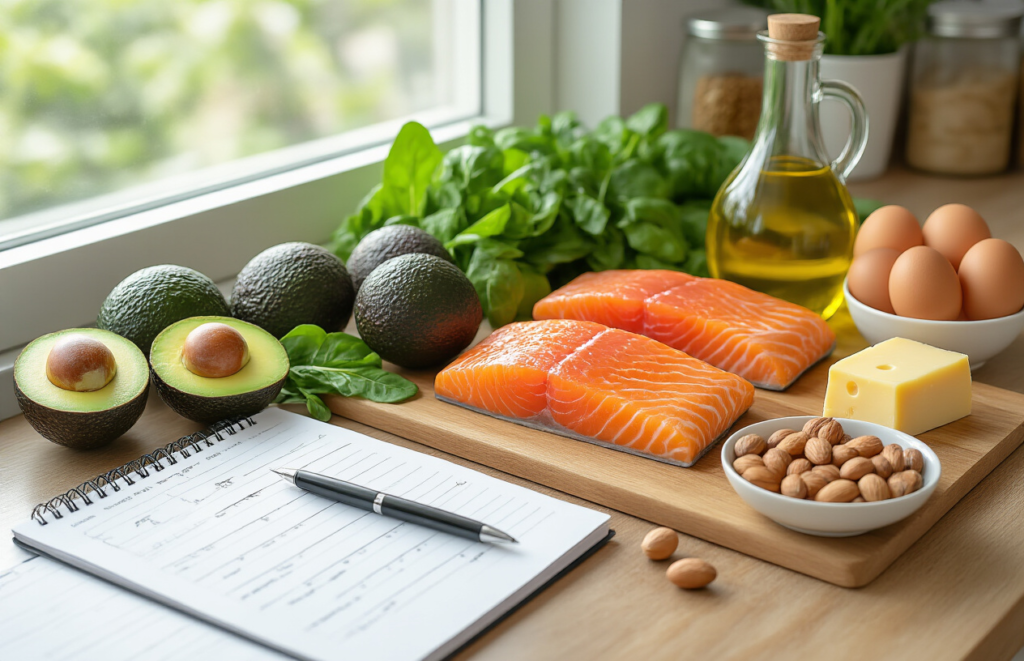
Calculating Your Personal Macronutrient Ratios
Your success on the keto diet for beginners hinges on hitting the right macronutrient targets daily. The standard ketogenic approach follows a 70-75% fat, 20-25% protein, and 5-10% carbohydrate slit, but your personal number will vary based on your body composition. activity level, and goals.
For a typical beginner keto approach, aim for:
Net carbs: 20-25 grams daily (total carbs minus fiber)
Protein: 0.8-1.2 grams per pound of lean body mass
Fat: Fill the remaining calories with healthy fats
Track everything meticulously during your during your first few weeks using apps like Cronometer or MyFitnessPal.
Stock your pantry with keto staples like coconut oil, avocado oil, grass-fed butter, and MCT oil. Keep plenty of storage bags and containers handy since you’ll be preparing more meals at home. A good set of measuring cups and spoons ensures accuracy when you’re learning to eyeball serving size.
Quality cookware makes a difference when you’re cooking with higher amount of fats. Non-stick pans work well, but cast iron and stainless steel distribute heat more evenly for better results with you keto-friendly foods.
Planning Your First Week of Keto Meals
Your first week set the foundation for long-term success, so planning ahead prevents decision fatigue and keeps you on track, when cravings hit. Start simple with familiar flavors adapted to fit your new low carb high fat diet approach.
Day 1-3 meal structure:
Breakfast:2 Scrambled eggs cooked in butter with spinach and cheese
Lunch: Large salad with grilled chicken, avocado, and olive oil dressing
Dinner: Salmon with roasted broccoli and cauliflower rice
Days 4-7 additions:
Introduce new recipes gradually
Add variety with different proteins and vegetables
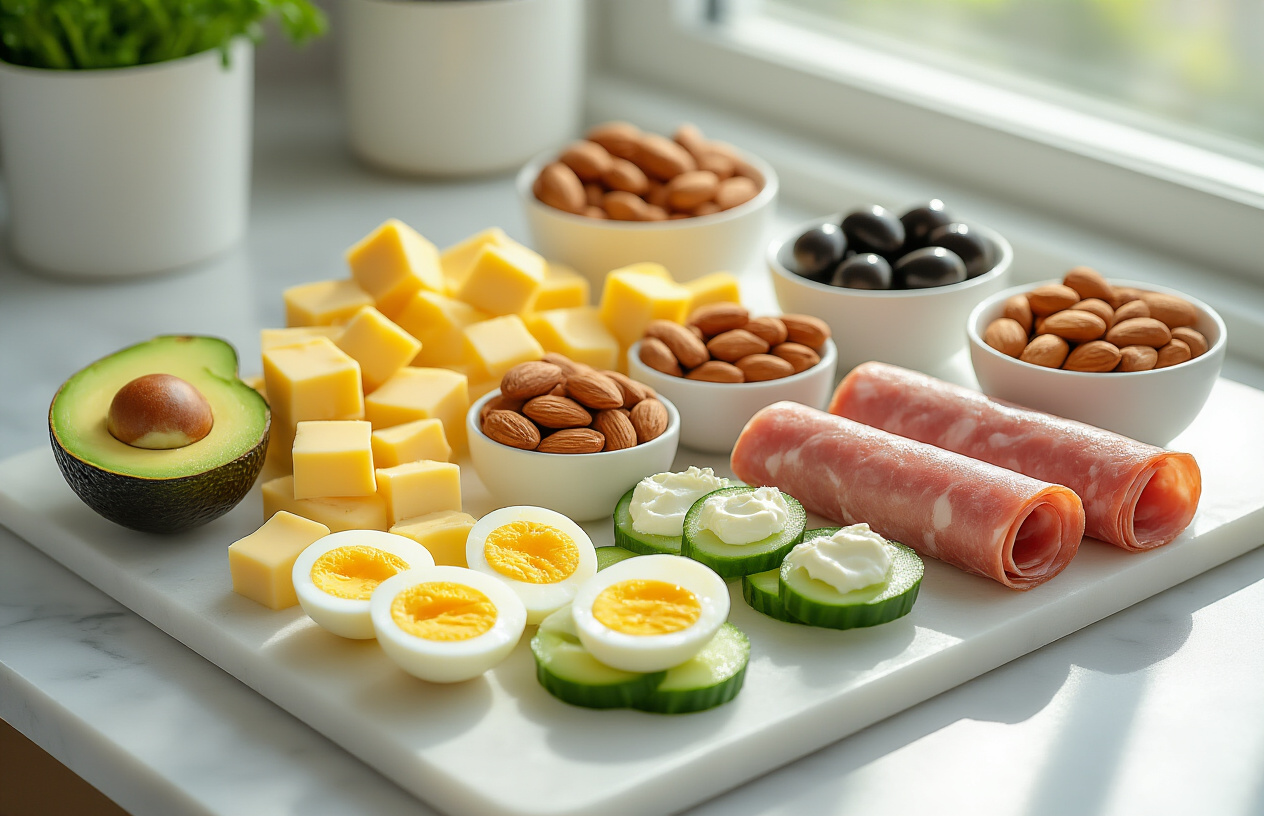
Experiment with keto-friendly snacks like nuts and cheese
Batch cook proteins on Sunday, grill several chicken breasts, cook ground beef, or roast a whole chicken. Prep vegetables by washing, chopping, and storing then in clear containers. Make large batches of keto meal plan staples like cauliflower rice, zucchini noodles, and hard boiled eggs.
Keep your first week simple to avoid overwhelm. Focus on whole, unprocessed foods. Plan for potential challenges by having backup meals ready like pre-cooked rotisserie chicken, and frozen vegetables can save the day when life gets busy.
What You Can Eat on Keto
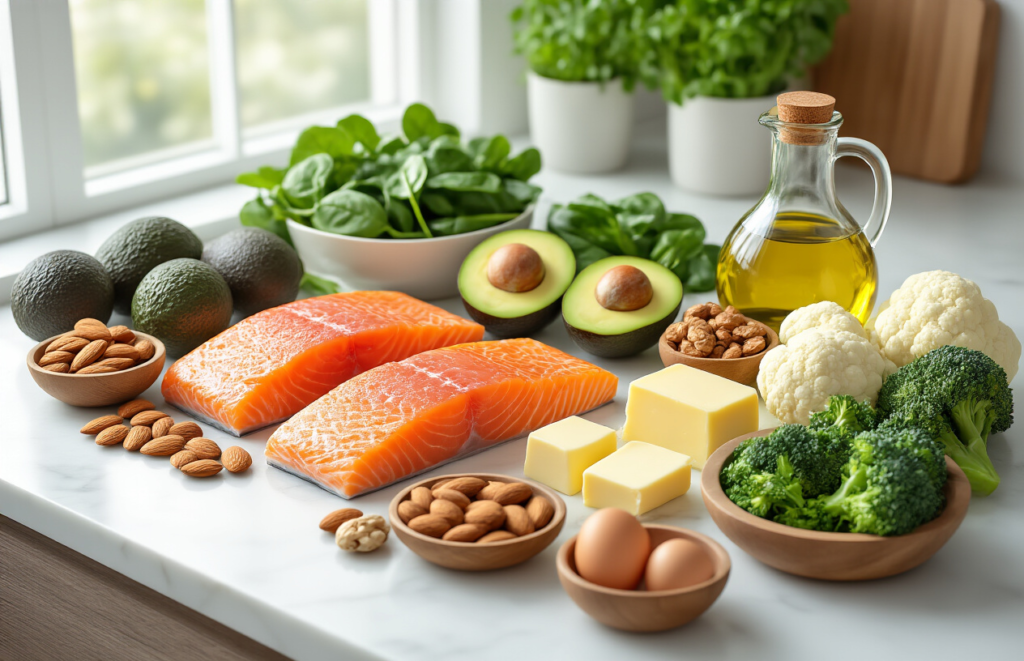
Getting started is easier once you know what’s on the “yes” list. Here are the keto-friendly foods you’ll love.
- Proteins: Beef, chicken, turkey, eggs, salmon, tuna, shrimp, sardines and mackerel.
- Healthy Fats: Avocado, olive oil, coconut oil, MCT oil, grass-fed butter, ghee, nuts, seeds
- Low-Carb Veggies: Spinach, kale, broccoli, cauliflower, zucchini, mushroom, bell peppers, brussels sprout
- Dairy: Cheese, heavy cream, Greek yogurt (unsweetened), cottage cheese, and hard cheese
- Beverages: Water, black coffee, herbal tea, bone broth
Keto-Friendly Snacks and Treats
Smart snacking prevents hunger between meals while maintaining your ketosis state. Cheese crisps, beef jerky (sugar free versions) satisfy cravings for crunchy foods. Hard boiled eggs with everything bagel seasoning creates portable protein powerhouse.
Fat bombs made from coconut oil, nut butter, and cocoa powder curb sweet tooths. Cucumber slices with cream cheese or guacamole provides refreshing options.
Olives, pickles, and avocado with sea salt make simple yet satisfying choices. Dark chocolate with 85% cacao or higher can occasionally fit into your beginner keto tips toolkit, just watch portion sizes.
Foods to Avoid for Keto Success
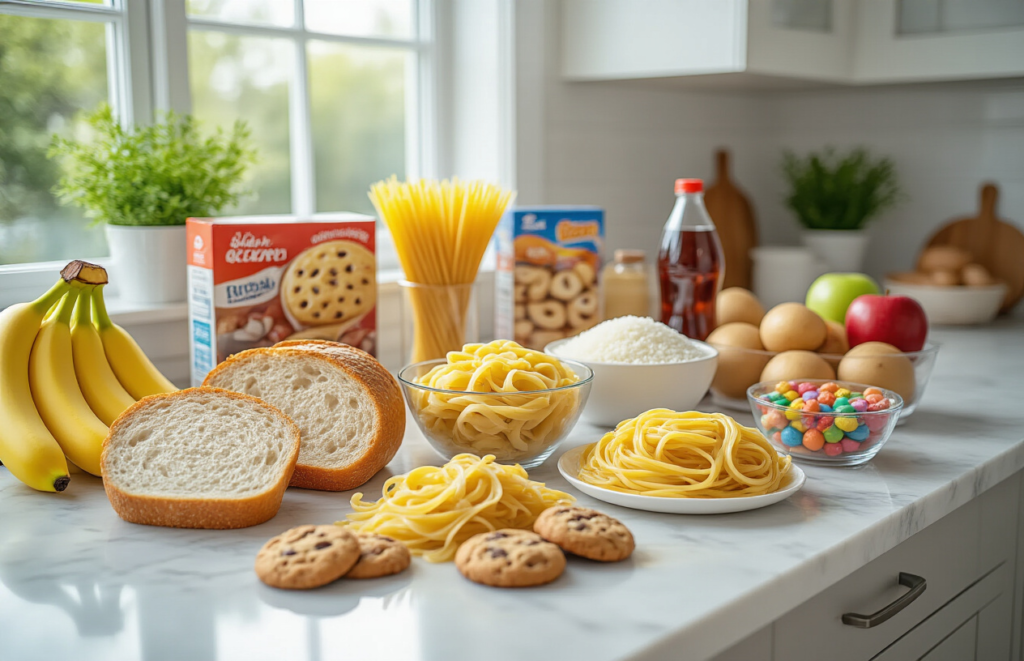
Your biggest enemy on the ketogenic diet guide isn’t always obvious. Hidden carbs lurk everywhere, sneaking into your meals and kicking you out of ketosis without warning. You’ll find these sneaky carbohydrates in condiments like ketchup, BBQ sauce, and honey mustard, which can contain 4-6 grams of carbs per tablespoon. Even your favorite salad dressing might pack 3-4 grams of hidden sugars.
These foods can kick you out of ketosis:
- Bread, pasta, rice, cereal, wheat, oats, quinoa
- Potatoes, sweet potatoes, corn, carrots, beets
- Beans and lentils
- Fruits (except berries in moderation)
- Sugary drinks, candy, desserts
- Processed foods high in carbs
Tip: If it’s labeled “low fat” or “diet” it’s usually not keto-friendly.
Possible Side Effects And How to Handle Them
Like any lifestyle change, keto comes with an adjustment period. Your first few weeks on the ketogenic diet might feel challenging as your body adapts to burning fat instead of carbs. The “keto flu” isn’t actually an illness, it’s your body’s way of adjusting to this new fuel source. You’ll likely experience fatigue, headaches, irritability or brain fog. Don’t worry it’s temporary.
How to handle it:
- Stay hydrated (drink at least 2-3 liters of water daily)
- Add electrolytes (sodium, potassium, magnesium)
- Don’t skimp on healthy fats
- Ease into it, gradually reduce carbs instead of cutting overnight

Tracking Progress Beyond The Scale
Your weight will fluctuate daily due to water retention, hormones, and other factors. Instead of obsessing over the number on the scale, pay attention to how your clothes fit.
Take body measurements weekly, many people loss inches before they see significant weight changes. Take photos this can reveal changes that numbers don’t capture. Keep a journal noting these non-scale victories.
Tips to Stay Consistent on Keto
- Meal Prep: Plan ahead so you don’t grab carb-heavy food in a pinch
- Read Labels: Carbs hide in sauces, dressings, and snacks
- Keep Snacks Handy: Nuts, cheese, or jerky help you stay on track
- Join a community: Support from others makes it easier to stick with it
- Track Your Progress: Apps like Carb Manager or MyFitnessPal can help
Conclusion

The keto diet can be a game changer for beginners who want weight loss, steady energy, and better focus. But like any lifestyle change, it’s important to listen to your body. If you have medical conditions, check with your doctor first.
Remember keto is not about perfection, it’s about building sustainable habits that support your health goals for years to come. Start small, be patient, and celebrate every win.
Are you ready to give keto a try? Whether your goal is weight loss, energy or better health, the ketogenic diet can set you up for success. Start today by making your first grocery list. Stock your kitchen with keto-friendly foods, plan your meals ahead, and don’t beat yourself up if you slip up occasionally, Focus on progress not perfection.
If you found this guide helpful, join my newsletter for weekly keto tips and healthy habits that make keto stick.
Related post
Walking the best exercise for weight loss
6 Easy Keto Snacks: Simple, Delicious and Totally Low Carb
25 Low Carb Recipes for Busy Weeknights
Best Keto Kitchen Tools for Easy Meal Prep
7 Best Air Fryers for Keto Cooking in 2026
Frequently Asked Questions
What is the keto diet?
The keto diet is a low-carb, high-fat eating plan designed to help your body enter a metabolic state called ketosis. In ketosis, your body burns fat for fuel instead of carbohydrates.
How many carbs can you eat on keto?
Most beginners aim for 20–50 grams of net carbs per day. Net carbs are calculated by subtracting fiber from total carbohydrates.
What foods can beginners eat on keto?
Keto-friendly foods include:
Meat and poultry
Eggs
Fatty fish
Cheese and full-fat dairy
Avocados
Nuts and seeds
Healthy oils like olive oil and coconut oil
Low-carb vegetables such as spinach, broccoli, zucchini, and cauliflower
How long does it take to get into ketosis?
Most people enter ketosis within 2–7 days, depending on carb intake, activity level, and metabolism.
What is the “keto flu”?
The keto flu refers to temporary symptoms some beginners experience when starting keto, including headaches, fatigue, brain fog, and irritability. Staying hydrated and increasing electrolytes may help reduce symptoms.
Can you lose weight on keto?
Many people use keto for weight loss because it may help reduce appetite and encourage the body to burn stored fat for energy.
Do you need to count calories on keto?
Not always. Many beginners naturally eat fewer calories because keto meals can be more filling. However, portion control still matters for weight loss.
Can beginners snack on keto?
Yes. Popular keto snacks include cheese sticks, hard-boiled eggs, beef jerky, olives, and nuts.
Is keto safe for everyone?
Keto may not be suitable for everyone, especially people with certain medical conditions or those taking medications. It’s a good idea to speak with a healthcare professional before making major dietary changes.
What drinks are allowed on keto?
Water, sparkling water, black coffee, unsweetened tea, and sugar-free electrolyte drinks are common keto-friendly beverage options.
Can you eat fruit on keto?
Some fruits are lower in carbs and can fit into keto in moderation. Berries like strawberries, raspberries, and blackberries are among the most keto-friendly fruits.
How do you know if keto is working?
Signs of ketosis may include reduced appetite, increased energy, weight loss, mental clarity, and changes in breath odor. Some people also use ketone test strips or meters to track ketosis.
Is keto beginner-friendly?
Yes. Starting with simple keto meals, meal prepping, and focusing on whole foods can make keto much easier for beginners.
What is the biggest mistake beginners make on keto?
One common mistake is not eating enough electrolytes and healthy fats. Another is consuming hidden carbs from sauces, snacks, and processed foods.