


This is your complete guide to transitioning off keto without weight gain.
You did it. You stuck with keto for months, maybe longer. You weathered the keto flu, said no to countless birthday cakes, and watched the pounds melt away. But now you’re standing at a crossroads.
Maybe you’re tired of the restrictions. Maybe social situations have become too difficult. Maybe you’ve started wondering if eating this much fat forever is really the answer. Whatever your reason, you’re ready to transition off keto.
This post contain affiliate links, and I may earn commission at no extra cost to you.
But there’s one thing holding you back: fear.
Fear that the weight will come rushing back. Fear that those hard-won results will disappear in weeks. Fear that your body will spiral out of control the moment you eat a slice of bread again.
Here’s the truth: You can transition off keto successfully. Thousands of people have done it. The key is doing it right, gradually, strategically, and with a plan that respects how dramatically keto has changed your metabolism.
In this guide, I’ll walk you through exactly how to wean off keto safely, which foods to add back first, what side effects to expect, and how to keep the weight off for good.
Want the Printable Version?
Grab my free 4-Week Keto Transition Schedule—a day-by-day guide to reintroducing carbs without the guesswork. Plus bonus meal plans and grocery lists!
[Yes, Send Me the Free Transition Guide!]
No spam, just practical keto transition tips. Unsubscribe anytime.
Why You Can’t “Stop” Keto Overnight
Here’s what happens when someone abruptly quits keto and immediately returns to their old eating habits: It’s a disaster.
What happens when you quit cold turkey:
The bottom line: Transitioning off keto should take weeks, not days. 14 days is a reasonable adjustment period, though longer-term keto followers may need more time.
How Long Should Your Transition Take?
The timeline depends entirely on how long you’ve been on keto. Medical experts from the Keto Hope Foundation, who specialize in helping epilepsy patients wean off therapeutic keto, provide these guidelines
| Keto Duration | Recommended Transition Time |
|---|---|
| Short-term (3-4 months) | 1-2 weeks |
| Moderate (6-12 months) | 3-4 weeks |
| Long-term (1+ years) | 3-6 months or longer |
Why the difference? The longer you’ve been in ketosis, the more your metabolism has adapted. Your enzyme production, gut bacteria, and even gene expression related to fat metabolism have shifted. Rushing the process risks metabolic confusion and rapid regain.
Did You Know? Epigenetic research shows that after 6-12 months of consistent ketosis, the body increases production of fatty acid transport proteins and mitochondrial enzymes. These changes can persist for several weeks after stopping the diet, which is actually good news! It means your body remains more efficient at burning fat during your transition
The 4-Week Keto Transition Plan
This step-by-step schedule is adapted from medical weaning protocols and registered dietitians recommendations.
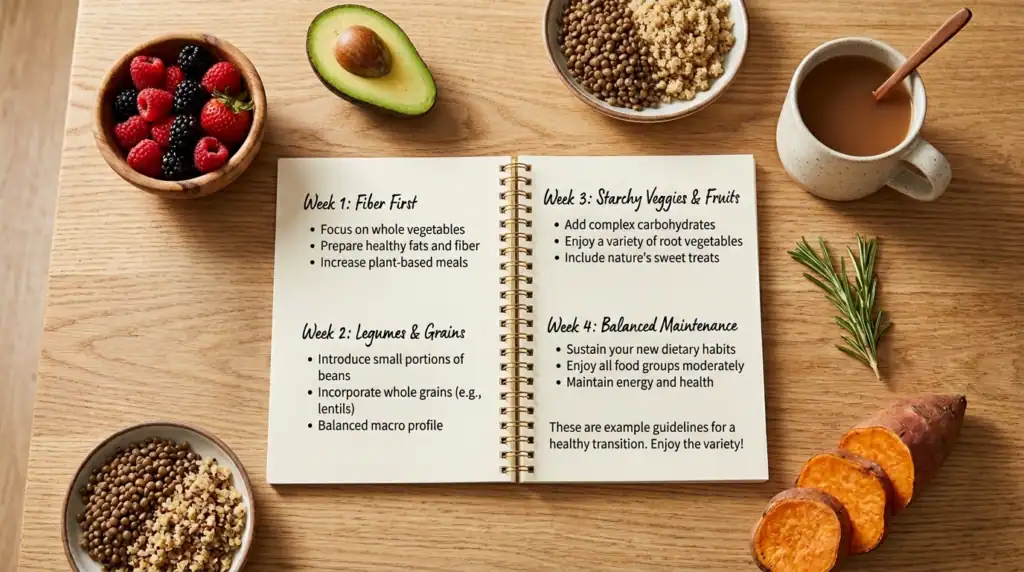
Week 1: Add Fiber First
Goal: Increase total carbs by 5-10g per day, focusing exclusively on high-fiber sources.
Daily carb target: Start at 50g net carbs, increase by ~10g every 3-4 days .
Foods to add:
- Non-starchy vegetables (increase portions)
- Berries (raspberries, blackberries, strawberries)
- Avocados, olives
- Nuts and seeds
- Leafy greens
Why fiber first: Fiber slows sugar absorption, feeds beneficial gut bacteria, and helps prevent blood sugar spikes . Kirkpatrick recommends “focusing on eating carbs that are high in protein and fiber” as the safest entry point .
Sample day:
- Breakfast: 2-egg omelet with spinach and mushrooms
- Lunch: Large salad with grilled chicken, avocado, olive oil
- Dinner: Salmon with roasted asparagus and ½ cup berries for dessert
- Total carbs: ~55-60g
Week 2: Introduce Legumes and Whole Grains
Goal: Continue increasing carbs by another 5-10g per day, now adding more complex carbohydrates.
Daily carb target: 70-90g net carbs
- Lentils and legumes
- Bean-based pastas
- Chickpeas
- Quinoa
- Sprouted grain breads (like Ezekiel)
- Buckwheat
- Barley
- Starchy vegetables in moderation (carrots, beets, peas)
What to watch for: Some bloating is normal as your gut adjusts. If it’s severe, slow down and stay at Week 1 foods for another few days.
Sample day:
- Breakfast: Greek yogurt with berries and 2 tbsp granola
- Lunch: Lentil soup with side salad
- Dinner: Grilled chicken with quinoa and roasted vegetables
- Total carbs: ~75-85g
Week 3 : Add Starchy Vegetables and Fruits
Goal: Expand to a wider variety of carbohydrate sources, including more natural sugars.
Daily carb target: 100-120g net carbs
Foods to add:
- Sweet potatoes and regular potatoes
- Winter squash (butternut, acorn)
- Corn
- Bananas
- Apples
- Oranges
- Mangoes (in moderation)
The fruit strategy: Remember that some fruits are higher in sugar than others. Continue prioritizing berries and lower-glycemic options, but now you can enjoy that apple or banana .
Sample day:
- Breakfast: Oatmeal with sliced banana and walnuts
- Lunch: Turkey sandwich on sprouted grain bread with avocado
- Dinner: Baked sweet potato with chili and side salad
- Total carbs: ~100-115g
Week 4: Reach Maintenance Level
Goal: Achieve a sustainable, balanced diet that maintains your weight.
Daily carb target: 150-200g net carbs (depending on your activity level and metabolism)
- All whole food carbohydrate sources
- Occasional treats in moderation
- Focus on 40% of calories from carbs as a general target
The 4g sugar rule: “avoid anything with more than 4 grams of added sugar” as a general guideline. Also be mindful of naturally occurring sugars in dried fruits and honey—”if you have a bar that has 22 grams of sugar but it’s all from dates, that’s still not good and you’re going to spike your blood sugar”
Overwhelmed? Let Me Simplify It
I’ve created a printable 4-Week Transition Calendar with daily meal suggestions, carb targets, and grocery lists. No guesswork, just follow the plan!
Download My Free Transition Calendar
What to Expect During Transition (And How to Handle It)
Your body will go through changes as you leave ketosis. Here’s what’s normal, and what’s not.
Normal Side Effects
Red Flags (Consult a Doctor)
- Severe abdominal pain
- Extreme blood sugar swings
- Debilitating fatigue
- Significant mood changes or depression
- Rapid, uncontrolled weight gain
The Sugar Pitfall: Your Biggest Risk
This is where most people fail. After months of clean eating on keto, sugar can become a dangerous temptation.
The trap: One of the benefits of the ketogenic diet is the low sugar intake and eliminating added sugar in your diet. If you followed keto for a couple months, you probably noticed decreased sugar cravings. There’s research proving that sugar is addicting, so why would you want to go back to that?
How to avoid it:
- Keep added sugar under 4g per serving as a rule of thumb
- Read labels carefully, sugar hides in salad dressings, sauces, breads, and “healthy” snacks
- Satisfy sweet cravings with fruit first—berries, apples, or a small banana
- Dark chocolate (70%+ cacao) remains a better choice than milk chocolate
- Be wary of “natural” sugars, honey, maple syrup, and dates still spike blood sugar
Lifestyle Habits That Protect Your Progress
Weight maintenance isn’t just about food. These factors play a huge role in whether you keep the weight off
1. Stay Hydrated
Dehydration causes irritability and can make you feel hungry when you’re actually just thirsty. Aim for half your body weight in ounces of water daily .
Tip: If you weigh 150 lbs, target at least 75 oz of water per day.
2. Prioritize Sleep
Poor sleep increases cortisol and ghrelin, making weight maintenance nearly impossible. Aim for 7-9 hours.
3. Manage Stress
Stress triggers hormonal cascades that promote fat storage. Practice deep breathing, meditation, or simply walking in nature
4. Keep Moving
Continue the exercise habits you built on keto. Aerobic and resistance training both support metabolic health
5. Maintain Your Support System
“Your environment, support system and lifestyle all play a factor,” explains Kirkpatrick. “So when keto is over and those things aren’t aligned correctly, it’s going to be easy to fall back into old habits and regain the weight.”
What a Post Keto Diet Plan Looks Like
Here’s a simple visual guide for building meals after keto:
| Food Group | Portion of Plate | Examples |
|---|---|---|
| Non-starchy vegetables | ½ the plate | Leafy greens, broccoli, peppers, cauliflower |
| Lean protein | ¼ the plate | Chicken, fish, eggs, tofu, legumes |
| Complex carbohydrates | ¼ the plate | Quinoa, sweet potato, beans, whole grains, fruit |
| Healthy fats | Added in moderation | Olive oil, avocado, nuts, seeds |
Total daily structure: 3 meals + 1-2 snacks if needed. Don’t skip meals, this prevents the blood sugar crashes that lead to cravings
Carb Cycling: An Intermediate Strategy
Some people find success with carb cycling, alternating between higher-carb and lower-carb days to maintain metabolic flexibility.
Sample carb cycling week:
- Monday-Wednesday: Moderate carbs (150g)
- Thursday-Friday: Lower carbs (50-75g)
- Saturday-Sunday: Higher carbs (200-250g, from quality sources)
This approach keeps your metabolism guessing and may help prevent weight loss plateaus
Frequently Asked Questions About Transitioning Off Keto
1. Will I gain all the weight back immediately?
No—but you will see a temporary jump on the scale. This is mostly water weight. Every gram of glycogen your body stores binds to 3-4 grams of water. A 2-5 pound increase is normal and not fat gain. Real fat regain happens only if you consistently overeat calories
2. How do I know if I’m adding carbs too quickly?
Listen to your body. Signs you’re rushing include:
Severe bloating or digestive distress
Intense sugar cravings
Dramatic energy crashes after meals
Rapid, continued weight gain beyond the initial water weight
If you experience these, drop back to your previous week’s carb level and stabilize before trying again
3. What carbs should I avoid completely during transition?
4. Can I ever eat sugar again?
Yes, in moderation—but be strategic. The goal isn’t to never enjoy a birthday cake again. It’s to make sugar an occasional treat, not a daily habit. Once you’ve fully transitioned (2-3 months), an occasional dessert won’t derail you if your overall diet is solid
5. What if I start keto again later?
6. Do I need to keep taking electrolytes?
Yes—at least during transition. Your body will continue excreting more sodium than usual for several weeks. Maintain electrolyte intake (sodium, potassium, magnesium) and stay hydrated, especially if you experience fatigue or muscle cramps
7. What about keto for medical conditions?
If you started keto for epilepsy, diabetes, or another medical condition, do not transition without medical supervision. Work with your healthcare team to create a personalized weaning plan
8. How do I handle social situations during transition?
This is where many people struggle. Strategies:
Bring a dish you can eat to gatherings
Scout menus ahead of time at restaurants
Don’t announce your transition—just make choices that work for you
Remember that one “off” meal won’t undo weeks of progress
9. Will my cholesterol change after keto?
Possibly. Some people see LDL cholesterol rise on keto and then normalize after reintroducing carbs. If you’re concerned, get bloodwork done before transitioning and again 3 months after to compare
10. I’m scared to transition. How do I know when I’m ready?
This fear is completely normal. You’re ready when:
You feel confident in your ability to make balanced choices
You’ve maintained your goal weight for at least 1-2 months
The restrictions feel more burdensome than beneficial
You have a plan (like this guide!)
Take it slow. There’s no deadline. Some people stay in maintenance keto for years—that’s okay too
Sample 7-Day Post-Keto Meal Plan
| Day | Breakfast | Lunch | Dinner | Snack |
|---|---|---|---|---|
| Monday | 2 eggs + spinach + 1 slice sprouted toast | Tuna salad with crackers + apple | Grilled salmon + quinoa + roasted broccoli | Greek yogurt + berries |
| Tuesday | Oatmeal with walnuts + banana | Lentil soup + side salad | Chicken stir-fry with bell peppers + brown rice | Hummus + veggie sticks |
| Wednesday | Greek yogurt parfait with berries + granola | Turkey + avocado wrap (whole wheat tortilla) | Beef chili with beans + side cornbread | Handful almonds |
| Thursday | Smoothie: spinach, banana, protein powder, almond milk | Leftover chili | Baked cod + sweet potato + green beans | Cottage cheese + peach |
| Friday | 2 eggs + black beans + salsa + avocado | Quinoa bowl with roasted vegetables + feta | Pizza night (thin crust, veggies, light cheese) + salad | Dark chocolate square |
| Saturday | Protein pancakes with berries | Sandwich on sprouted bread + side salad | Dinner out (choose balanced option) | Apple + peanut butter |
| Sunday | Veggie omelet + ½ grapefruit | Leftovers | Roasted chicken + wild rice + roasted carrots | Trail mix |
Key Takeaways
- Transition slowly, weeks to months depending on your keto duration
- Add fiber first, then legumes/grains, then starchy carbs
- Expect temporary water weight gain—it’s normal
- Avoid sugar bombs, keep added sugar under 4g per serving
- Maintain healthy habits, sleep, hydration, exercise, stress management
- Listen to your body, slow down if symptoms are severe
- You’ve got this, thousands have successfully transitioned before you
Ready to Transition With Confidence?
You don’t have to figure this out alone. Join my email community and get:
✅ The 4-Week Keto Transition Calendar (printable PDF)
✅ 10 Post-Keto Recipes to ease the switch
✅ Grocery lists for each transition phase
✅ Weekly check-in emails with tips and encouragement
[Send Me The Free Transition Bundle!]
Lola is a keto and nutrition enthusiast who helps people navigate low-carb living, including what comes after. After transitioning off keto herself (without gaining weight back!), she’s passionate about showing others that you can leave keto behind while keeping your results. Find more at https://lolarecommends.com/
Have you transitioned off keto before? What worked (or didn’t work) for you? Drop your experience below, I read every comment and would love to feature reader success stories! 👇
You’ve got this! Thousands of people have successfully transitioned off keto, and with this structured plan, you can too. Remember that this is about finding a sustainable, enjoyable way of eating that supports your health for years to come
This guide is for informational purposes only and is not intended as medical advice. Always consult with a healthcare provider before making significant changes to your diet.