

A continuous glucose monitor (CGM) can transform how you approach the ketogenic diet, giving you real-time insights into your body’s metabolic response. If you’re following keto and want to eliminate the guesswork around what foods work best for your body, a CGM for keto offers the data you need to make informed decisions.
Heads up: This post may contain affiliate links, I may earn a small commission at no extra cost to you.
This guide is perfect for keto dieters who want to take their results to the next level, whether you’re just starting out or you’ve hit a plateau. You’ll discover how to spot unexpected blood sugar spikes on keto that might be sabotaging your progress, and learn to read your glucose patterns like a roadmap to better metabolic health.
In the past, we had to rely on finger-prick blood tests or “feeling” our way through ketosis. But in 2026, the game has changed. Continuous Glucose Monitors (CGMs), once reserved only for diabetics, have become the ultimate tool for the keto community.
A CGM is like a “window” into your metabolism. It allows you to see, in real-time, how stress, sleep, and those “fiber-bombs” we’ve been discussing actually affect your blood sugar. If you’re serious about Fiber Maxing and Keto Gut Health, a CGM is how you prove your strategy is working.
What Is a CGM and Why Do You Need One for Keto?
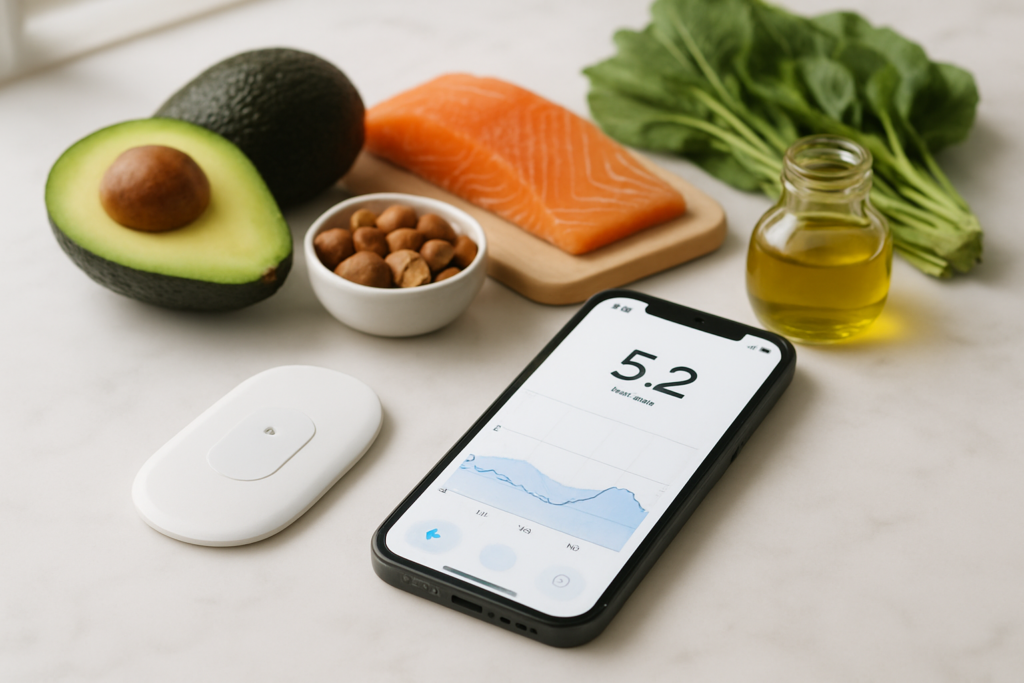
The continuous glucose monitor works by measuring glucose levels in your interstitial fluid through a tiny sensor inserted just under your skin. This sensor checks your glucose every minute and wirelessly transmits the data to your smartphone or dedicated device, giving you a complete picture of how your blood sugar responds to food, exercise, stress, and sleep.
The sensor uses an enzyme-based electrochemical process that converts glucose into an electrical signal. While there’s typically a 10-15 minute delay between blood glucose changes and what your CGM displays (since interstitial fluid glucose lags behind blood glucose), this real-time tracking reveals patterns you’d never catch with finger pricks.
Your CGM creates a detailed glucose curve throughout the day, showing exactly when your levels spike, dip, or remain stable. You’ll see how different foods affect your blood sugar within 30-90 minutes of eating, and how your glucose naturally fluctuates during sleep and upon waking.
Key Difference Between a CGM and Traditional Glucose Testing Methods
Traditional finger-stick glucose meters give you snapshots – single moments in time that miss the bigger picture. Your CGM for keto provides continuous data streams that reveal the full story of your metabolic responses.
| Traditional Testing | Continuous Glucose Monitor |
|---|---|
| 3-8 readings per day | 1,440 readings per day |
| Painful finger pricks | Pain-free monitoring |
| No trend data | Real-time trends and alerts |
| Miss overnight patterns | 24/7 monitoring |
| Static snapshots | Dynamic glucose curves |
With traditional testing, you might check your glucose in the morning and evening, missing the blood sugar spikes on keto that could be sabotaging your progress. Your CGM catches every fluctuation, including those subtle rises that occur even with keto-friendly foods.
The continuous data helps you understand your glucose variability, how much your levels swing throughout the day. Lower variability typically indicates better metabolic health and more consistent ketosis.
The Goal: A “Flat Glucose Line”
For keto dieters, the goal isn’t zero glucose—it’s low glycemic variability. A flatter glucose line means:
- Better insulin sensitivity
- Easier fat burning
- Fewer cravings and energy crashes
This is where CGM for keto becomes a powerful optimization tool.
3 Things a CGM Will Teach You About Your Keto Diet
1. Your Personal Carb Threshold
One of the biggest myths in keto is that everyone has the same carb limit.
With a CGM, you’ll see that:
- Some people stay stable at 50g net carbs
- Others spike at 20g or less
Your CGM reveals your true carb tolerance, not a one-size-fits-all rule.
2. The Impact of “Keto” Sweeteners
Not all keto sweeteners behave the same in your body.
A CGM quickly exposes:
- Sugar alcohols like maltitol causing glucose spikes
- “Hidden insulin responses” from certain low-carb snacks
What looks keto on the label may not be keto for your metabolism.
3. The Stress & Sleep Connection
Even with zero carbs, a poor night’s sleep can raise your fasting glucose.
Your overnight glucose patterns reveal critical insights about your metabolic health that daytime readings might miss. Check your CGM first thing each morning to see how stable your glucose remained during sleep. Healthy keto metabolism typically shows minimal variation, usually within a 20 mg/dL range throughout the night.
CGM data often shows:
- Elevated morning glucose after poor sleep
- Stress-induced spikes from cortisol
This proves that keto success isn’t just about food, it’s about lifestyle signals.
How to Use a CGM to Optimize Fiber Maxing
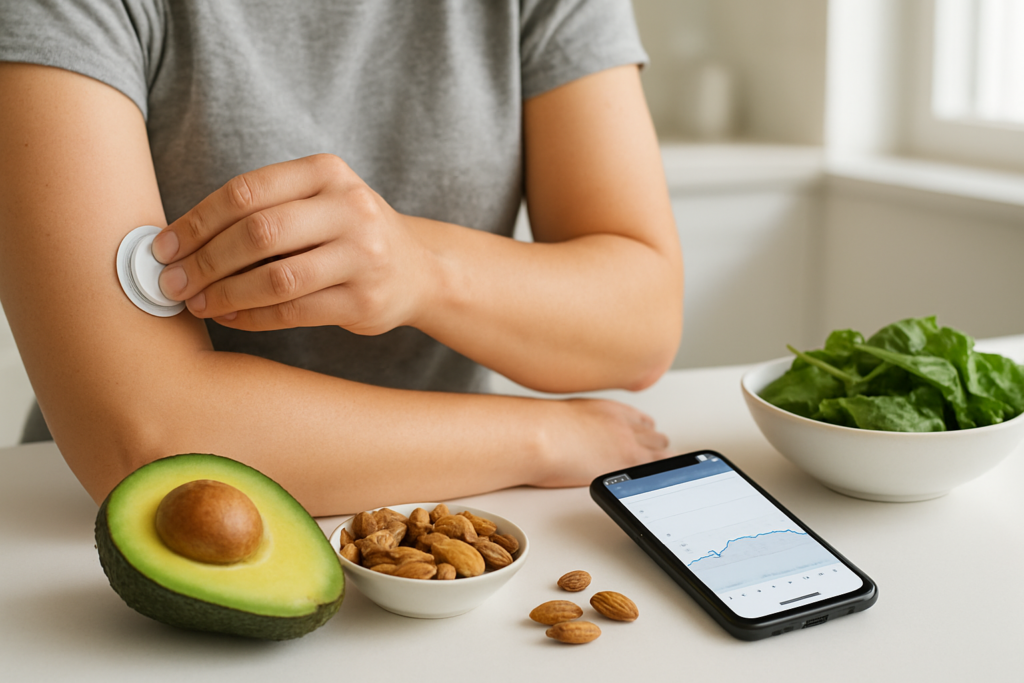
One of the most powerful uses of a CGM for keto is seeing how fiber buffers glucose responses.
The Experiment
Compare two meals:
- Dirty Keto: Bacon + cheese
- Fiber-Maxed Keto: Salmon + avocado + chia seeds
What You’ll See
The fiber-maxed meal produces:
- Lower peak glucose
- Faster return to baseline
- Reduced glycemic variability
This is called the glucose buffer effect, where fiber slows digestion and flattens the post-meal curve.
Key terms: glycemic variability, glucose response, fiber buffering
Download FREE Keto Fiber Cheat Sheet
Understanding the “Dawn Phenomenon” on Keto
Ever wake up with higher blood sugar despite being in ketosis?
That’s often the dawn phenomenon.
Why It Happens
In the early morning hours, your body releases cortisol and growth hormone, signaling the liver to release glucose.
Healthy vs. Problematic
- Glucose Neogenesis: Normal, hormone-driven rise
- Hidden Carb Spike: Delayed reaction from food or sweeteners
On keto, dawn phenomenon typically becomes less pronounced over time, but you might still see a 10-20 mg/dL rise from your overnight baseline. Blood sugar spikes on keto during dawn hours are usually temporary and resolve within an hour or two without eating.
Don’t panic if your CGM shows higher readings upon waking. Instead, track the pattern over several weeks. If your dawn phenomenon glucose consistently exceeds 120 mg/dL or takes more than 2-3 hours to return to baseline, consider adjusting your evening meal timing or composition.
Some strategies that help manage dawn phenomenon include:
- Eating dinner earlier (3-4 hours before bed)
- Including moderate protein in your last meal
- Managing stress through meditation or gentle movement
- Ensuring adequate sleep quality
A CGM helps you tell the difference between normal dawn phenomenon and problematic glucose elevation, so you don’t panic or overcorrect.
How to Get a CGM as a Non-Diabetic in 2026
You no longer need diabetes to access CGM technology.
Modern Wellness Platforms
Popular options include:
- Levels
- Nutrisense
- Veri
These platforms provide sensors, apps, and insights designed for metabolic health and keto optimization.
The “Scribe” Method
If you prefer insurance coverage, you can ask your doctor for a preventative health prescription, citing:
- Metabolic health tracking
- Family history of insulin resistance
- Weight management goals
Many providers are now open to this approach.
Choosing The right CGM Device for Your Keto Lifestyle.
Your success with a CGM for keto depends heavily on picking the right device that matches your lifestyle and budget. The two main players in the CGM market are Dexcom and FreeStyle Libre, each offering unique advantages for keto dieters.
The Dexcom G7 stands out as the gold standard for real-time glucose monitoring. You’ll get instant alerts when your blood sugar moves outside your target range, which is crucial when you’re fine-tuning your keto macros. The device automatically sends data to your smartphone every minute, giving you the most comprehensive picture of how different foods affect your glucose levels.
FreeStyle Libre 3, on the other hand, offers excellent value without breaking the bank. While slightly less feature-rich than Dexcom, it provides 14-day sensor wear time and smartphone connectivity that works perfectly for tracking your keto progress. The scanning feature lets you check your levels discreetly throughout the day.
Consider your daily routine when choosing. If you’re constantly on the go and need instant notifications about blood sugar spikes on keto, Dexcom’s automatic alerts will serve you better. If you prefer checking your levels manually and want to save money, FreeStyle Libre delivers reliable data at a lower cost.
Insurance coverage varies significantly between devices, so check with your provider before purchasing. Many insurance plans now cover CGMs for non-diabetics when prescribed for metabolic health monitoring.
The “Flat Line” Metric: Glycemic Variability Explained
Instead of focusing only on average glucose, CGMs highlight glycemic variability, how much your blood sugar fluctuates.
Why It Matters
Lower variability means:
- Less inflammation
- More stable energy
- Easier fat adaptation
For keto dieters, this “flat line” is a sign your metabolism is running efficiently.
Identifying and Solving Keto Plateau Using Glucose Patterns
Your CGM for keto can reveal exactly why you’ve hit that frustrating plateau where weight loss stalls despite following your diet perfectly. Watch for glucose patterns that show your body has adapted too well to your current routine. If your morning glucose readings have crept up consistently over several weeks, or your glucose response to meals has become more pronounced, your metabolism might have downshifted.
Look for these telltale signs in your data: sustained glucose levels above 100 mg/dL throughout the day, larger spikes after meals you used to handle easily, or slower returns to baseline after eating. These patterns indicate your body needs a metabolic reset.
Break through plateaus by implementing strategic carb cycling based on your CGM readings. Try adding 20-30 grams of clean carbs once weekly while monitoring how your glucose responds. If you see a sharp spike followed by a quick return to normal, your metabolism is responding well. Alternatively, try intermittent fasting for 18-24 hours while watching your glucose patterns – healthy metabolisms will show steady, gradual decreases without dramatic swings.
Your exercise timing also matters. If your post-workout glucose readings aren’t dropping as expected, shift your workout timing or increase intensity. The goal is to see glucose dip below your typical baseline within 2-3 hours post-exercise.
Conclusion: CGM for Keto Is the Ultimate Personalization Tool
A CGM for keto transforms your diet from rule-following into data-driven precision.
It helps you find your personal carb threshold, identify hidden triggers, and optimize fiber maxing for long-term metabolic health.
Keto isn’t about eating less, it’s about responding better.
The real magic happens when you start making small adjustments based on your data patterns. Track how your glucose responds to different fat sources, protein amounts, and meal timing. Use this information to push past plateaus, maintain steady energy levels, and stay in that sweet spot of ketosis. Your CGM is your personal metabolic coach – trust what it tells you and let the data guide your keto success.
Want to take this further? Read my Fiber Maxing Guide to learn how to flatten your glucose curve naturally.